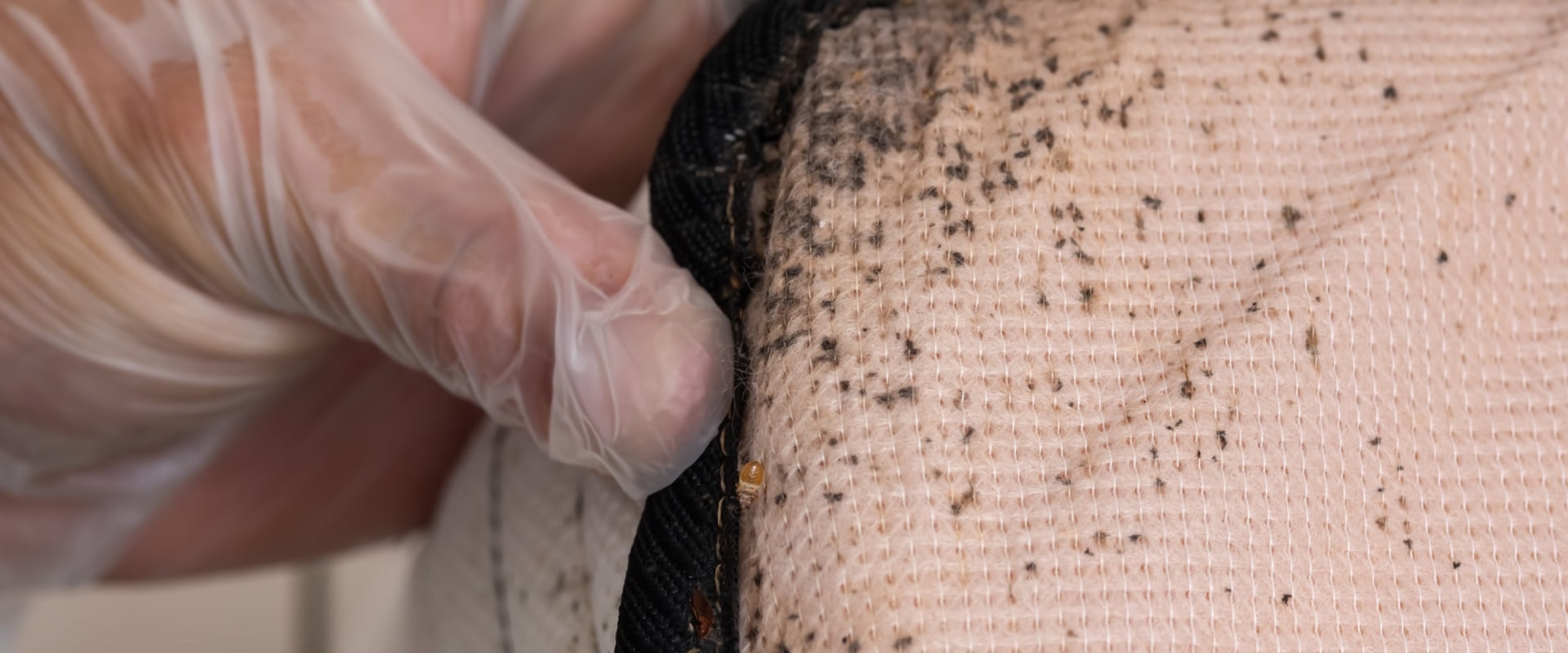
Many homeowners assume bed bug inspections only matter after bites or visible bugs appear—but by then, the problem is usually well underway. Regular inspection is one of the most effective ways to catch bed bugs early, before they spread to furniture, closets, and multiple rooms. Based on what we see during real-world cleanouts at JiffyJunk, this guide explains how often you should inspect, what to check, and why timing matters if you want to avoid a costly infestation.
Quick Answers
Bed Bugs
Bed bugs are small, flat insects that hide close to where people sleep and feed at night. Because they stay out of sight, infestations often grow quietly. In real cleanout situations, homes that follow a consistent inspection routine almost always catch bed bugs earlier—reducing spread, stress, and the need for large-scale furniture removal.
Top Takeaways
Bed bugs should be inspected for regularly, not just when symptoms appear
Early inspections catch infestations before furniture is affected
Travel, guests, and used items increase inspection frequency
Consistent checks reduce cleanup costs and disruption
Timing matters more than most homeowners realize
How Often You Should Inspect for Bed Bugs
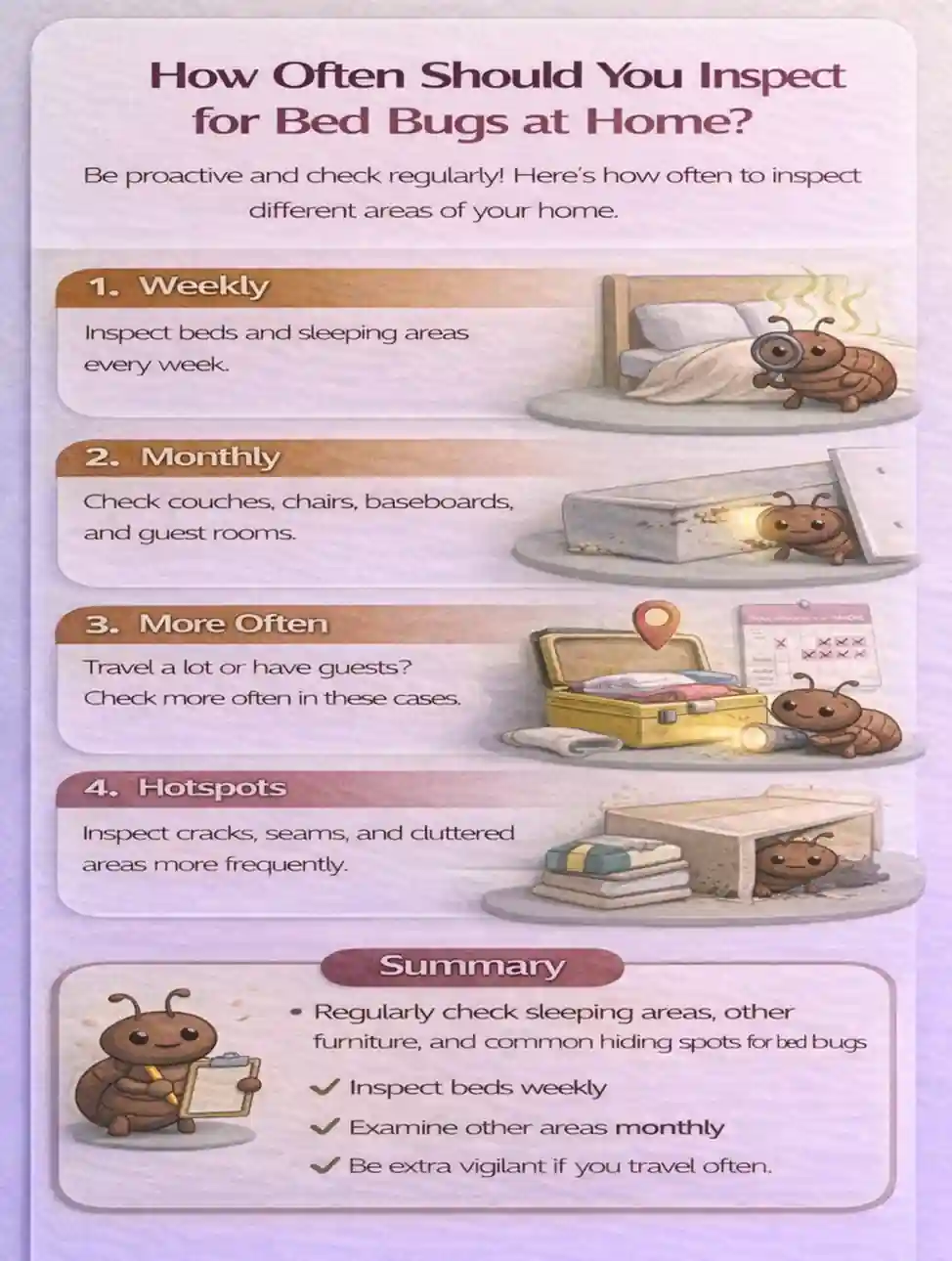
For most homes, a monthly inspection is a practical baseline. This frequency is enough to catch early signs—like fecal spots or shed skins—before bed bugs multiply. Homes with higher exposure risks may need more frequent checks.
When to Inspect More Frequently
Certain situations significantly increase the risk of bed bugs entering your home. Based on real cleanout patterns, inspections should be done weekly or biweekly if you:
Travel frequently or recently stayed in hotels
Host overnight guests
Live in apartments or shared housing
Bring in used furniture or mattresses
In many cases we see, infestations start after one overlooked event—not ongoing neglect.
Where to Focus During Inspections
Inspections don’t need to be time-consuming, but they must be targeted. The most important areas include:
Mattress seams and edges
Box springs and bed frames
Headboards and nightstands
Upholstered furniture near sleeping areas
Catching early signs in these locations often prevents bed bugs from spreading to entire rooms.
What Regular Inspections Prevent
Homes that inspect consistently tend to avoid:
Bed bugs reaching couches and dressers
The need to discard large furniture items
Lengthy, stressful cleanouts
Escalating treatment costs
From firsthand experience, inspection frequency directly affects how disruptive the situation becomes, especially when paired with proactive home maintenance such as dryer vent cleaning services.
“In homes where bed bugs are caught early, there’s almost always a pattern of regular inspection. When inspections are skipped, the infestation usually isn’t discovered until furniture has to be removed.”
Essential Resources
EPA Bed Bug Guide — Inspection & Prevention Basics
https://www.epa.gov/bedbugs
Clear guidance on how to inspect safely, recognize early signs, and avoid ineffective treatments.
Clear guidance on how to inspect safely, recognize early signs, and avoid ineffective treatments.
CDC Bed Bug Resource — Health & Exposure Awareness
https://www.cdc.gov/parasites/bedbugs
Explains why early detection matters from a health and prevention standpoint.
Explains why early detection matters from a health and prevention standpoint.
NPMA Bed Bug Guide — Professional Inspection Insights
https://www.pestworld.org/pest-guide/bed-bugs
Shows what professionals look for during inspections and when intervention is recommended.
Shows what professionals look for during inspections and when intervention is recommended.
Mayo Clinic — Understanding Bed Bug Symptoms
https://www.mayoclinic.org/diseases-conditions/bed-bugs
Helpful for connecting inspection findings with physical symptoms.
Helpful for connecting inspection findings with physical symptoms.
Harvard T.H. Chan — Bed Bug Spread & Persistence
https://www.hsph.harvard.edu/bedbugs
Explains why missed inspections allow infestations to grow quietly.
Explains why missed inspections allow infestations to grow quietly.
University of Kentucky Entomology — Inspection Science
https://entomology.ca.uky.edu/ef636
Details bed bug behavior and why routine inspection locations matter.
Details bed bug behavior and why routine inspection locations matter.
Consumer Reports — Prevention & Monitoring Tips
https://www.consumerreports.org/pests/how-to-get-rid-of-bed-bugs-a3329821929
Real-world advice on monitoring and prevention between inspections.
Real-world advice on monitoring and prevention between inspections.
Supporting Statistics
Most infestations go unnoticed at first.
Fewer than 3 in 10 Americans can accurately recognize bed bugs, which explains why early warning signs are often missed without routine inspections.
Source: NPMA / Harris Poll
https://www.pestworld.org/news-hub/pest-articles/bed-bug-survey-results-facts/
Bed bugs are a routine problem for professionals.
More than 80% of U.S. pest control professionals report treating bed bugs every year, highlighting how frequently infestations develop before homeowners realize there’s an issue.
Source: NPMA / University of Florida
https://www.pestworld.org/news-hub/pest-articles/bed-bug-survey-results-facts/
Bed bugs are regulated due to their impact.
Over 20 U.S. states have bed bug–specific laws, often tied to housing, hotels, and furniture handling—underscoring the importance of early detection and proper response.
Source: U.S. EPA
https://www.epa.gov/bedbugs/bed-bug-laws-and-regulations
Bottom line:
Consistent inspections dramatically reduce the chance of an infestation going unnoticed—and becoming far more costly to manage later—especially when paired with supportive measures such as the best air purifiers to maintain a cleaner indoor environment.
Most infestations go unnoticed at first.
Fewer than 3 in 10 Americans can accurately recognize bed bugs, which explains why early warning signs are often missed without routine inspections.
Source: NPMA / Harris Poll
https://www.pestworld.org/news-hub/pest-articles/bed-bug-survey-results-facts/
Bed bugs are a routine problem for professionals.
More than 80% of U.S. pest control professionals report treating bed bugs every year, highlighting how frequently infestations develop before homeowners realize there’s an issue.
Source: NPMA / University of Florida
https://www.pestworld.org/news-hub/pest-articles/bed-bug-survey-results-facts/
Bed bugs are regulated due to their impact.
Over 20 U.S. states have bed bug–specific laws, often tied to housing, hotels, and furniture handling—underscoring the importance of early detection and proper response.
Source: U.S. EPA
https://www.epa.gov/bedbugs/bed-bug-laws-and-regulations
Final Thought & Opinion
Bed bug infestations rarely explode overnight—they grow quietly when inspections are skipped. In homes where inspections are routine, infestations are smaller, easier to manage, and far less disruptive. In homes where inspections are rare, the first discovery often happens too late.
From firsthand experience, inspection frequency directly controls outcome. The difference between a manageable issue and a full cleanout often comes down to how often someone took a few minutes to look, along with basic home maintenance such as duct cleaning.
Next Steps
Set an inspection schedule
Monthly for most homes. Weekly after travel or guests.
Inspect key areas first
Beds, nearby furniture, and upholstery.
Increase checks after risk events
Travel, used furniture, shared housing.
Document anything unusual
Spots, skins, or repeated signs.
Act quickly if signs appear
Early action prevents spread and removal.
Following these steps helps catch bed bug activity early and limit how far infestations spread, while complementary measures such as using air purifiers can support a cleaner indoor environment during ongoing monitoring and prevention efforts.
Set an inspection schedule
Monthly for most homes. Weekly after travel or guests.
Inspect key areas first
Beds, nearby furniture, and upholstery.
Increase checks after risk events
Travel, used furniture, shared housing.
Document anything unusual
Spots, skins, or repeated signs.
Act quickly if signs appear
Early action prevents spread and removal.
FAQ on Bed Bugs
Q: How often should most homes inspect for bed bugs?
A: Monthly inspections are ideal for low-risk homes, with more frequent checks after travel or guests.
Q: Is inspection necessary if I don’t have bites?
A: Yes. In many cases, infestations are discovered before bites ever occur.
Q: What’s the biggest mistake homeowners make?
A: Waiting for obvious signs instead of inspecting regularly.
Q: Do inspections really prevent large infestations?
A: Yes. Early detection consistently reduces spread and cleanup costs.
Q: When should professionals be involved?
A: If signs repeat or appear beyond bedding, professional help is recommended.
A: Monthly inspections are ideal for low-risk homes, with more frequent checks after travel or guests.
A: Yes. In many cases, infestations are discovered before bites ever occur.
A: Waiting for obvious signs instead of inspecting regularly.
A: Yes. Early detection consistently reduces spread and cleanup costs.
A: If signs repeat or appear beyond bedding, professional help is recommended.