This guide shares the best garage storage ideas after a cleanout, focusing on systems that prevent clutter from returning. Based on what we’ve seen firsthand during hundreds of cleanouts at Jiffy Junk, these storage solutions are designed for real garages, not Pinterest perfection. Expect practical ideas like wall storage, heavy-duty shelving, overhead racks, and bin setups that help you store more, find things faster, and keep your garage clean long-term.
TL;DR Quick Answers
Garage Clean Out
A garage clean out is the fastest way to reclaim space and stop clutter from piling up.
Quick answer (Jiffy Junk insight):
Start by removing large junk first (it creates instant space).
Sort the rest into Keep, Donate, Dispose.
Don’t “reorganize clutter” — haul out what you don’t need before buying storage.
Set up simple zones (tools, seasonal, sports) so clutter doesn’t return.
Top Takeaways
Cleanout is step one. Storage keeps it organized.
Create zones first. Give every category a home.
Go vertical. Use walls, shelving, and overhead racks to keep floors clear.
Use bins and labels. Make items easy to find and return.
Keep it simple. Consistency beats perfection.
Best Garage Storage Ideas After a Cleanout
After a garage cleanout, your biggest goal isn’t just keeping things neat. It’s creating a system that makes it easy to put things away, find what you need quickly, and prevent clutter from building up again. The best garage storage ideas don’t require a full remodel either. With the right layout, zones, and storage tools, even a small garage can stay organized long-term.
Below are the most effective garage storage solutions to set up right after your cleanout.
1. Start With Storage Zones (So Items Don’t Drift Back Into Piles)
Before you install shelves or buy bins, define storage zones based on how you actually use your garage. This prevents random stacking and keeps everything in a predictable place.
Common garage zones include:
Tools and DIY supplies
Sports and outdoor gear
Holiday décor
Car care supplies
Gardening equipment
Bulk household storage
Once you have zones, it becomes much easier to choose the right storage system for each category.
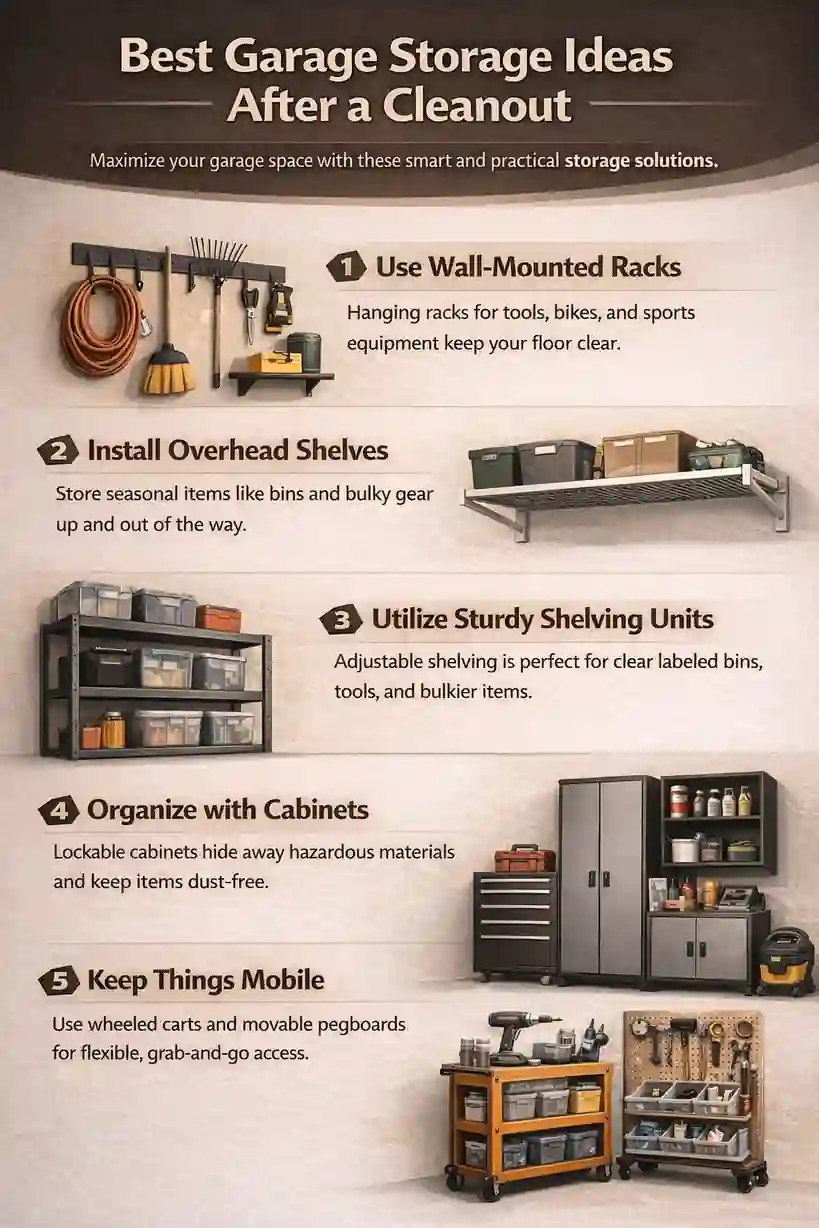
2. Use Wall Space First With Pegboards, Hooks, and Slatwall
Wall storage is one of the fastest ways to reclaim floor space after a cleanout. It keeps frequently used items visible and easy to grab, while preventing clutter from landing back on the ground.
Best wall storage options:
Pegboards for hand tools and small gear
Heavy-duty hooks for bikes, ladders, hoses, and leaf blowers
Slatwall panels for flexible, adjustable storage
Magnetic strips for metal tools
If you want your garage to stay clean, getting items off the floor is the biggest win.
3. Install Heavy-Duty Shelving for “Keep” Items You Don’t Use Daily
After a cleanout, you’ll usually have items worth keeping but not worth seeing every day. That’s where shelving shines.
Tips for smart shelving:
Choose metal or industrial-grade shelves for weight and durability
Store items in clear or labeled bins to avoid mystery boxes
Keep heavy items on lower shelves
Keep seasonal items on higher shelves
Shelving creates structure, which makes your garage easier to maintain week after week.
4. Add Overhead Storage Racks for Seasonal and Bulky Items
If you’re running out of space, overhead racks are one of the most efficient upgrades you can make after a cleanout. They use the unused ceiling area to store items you only access occasionally.
Best items for overhead storage:
Holiday decorations
Camping gear
Seasonal sports equipment
Storage totes
Folding chairs
This keeps bulky items out of the way while still accessible when you need them.
5. Store Small Items in Stackable, Labeled Bins (Not Loose Boxes)
One of the biggest reasons garages get messy again is that small items get dumped into random bags, bins, or boxes. The fix is a consistent bin system.
A simple bin strategy that works:
Use matching stackable bins
Label by category, not by random item lists
Keep a dedicated shelf for bins
Avoid cardboard boxes (they collapse, collect dust, and hide clutter)
When storage is consistent, staying organized becomes effortless.
6. Create a “Drop Zone” for Everyday Grab-and-Go Items
Every garage needs a small space for items that come and go frequently. Without it, those items become clutter.
Good drop zone ideas:
A small shelf near the garage door
A wall hook station for bags, jackets, and helmets
A basket or bin for returns or donations
A tray for keys, tape, batteries, and essentials
This prevents your clean garage from turning into a daily dumping ground.
7. Keep the Floor Clear With a Simple Rule: Nothing Lives on the Ground
After cleanouts, we often see the same issue: people start placing items on the floor temporarily and those temporary piles become permanent.
A simple rule that works:
If it can’t fit on a shelf, hook, or rack, it doesn’t belong in the garage
This one rule instantly protects the progress you made during the cleanout.
8. Maintain the Results With a 10-Minute Weekly Reset
The secret to long-term garage organization isn’t perfection. It’s routine. A quick weekly reset stops clutter from building up.
A simple 10-minute garage reset:
Put items back in their zones
Break down any new boxes
Toss trash
Add donation items to a bin
Re-stack bins neatly
This keeps your garage clean without needing another big cleanout later.
Final Tip: The Best Garage Storage System Is the One You’ll Actually Use
The most effective storage ideas are simple, practical, and designed around your habits. If your garage is easy to use, it stays organized naturally, and different types of air purifiers can help keep the space freshergara while you clean and store items.
If you want help removing leftover junk or clearing space for a storage setup, Jiffy Junk makes it easy to haul away what you don’t need so your clean garage stays clean.
“One of the biggest mistakes homeowners make after a garage cleanout is putting items back without a system. In our experience at Jiffy Junk, organization isn’t about having less, it’s about storing smarter. Wall storage, shelving, and labeled bins aren’t just ‘nice to have’ they’re what keeps clutter from rebuilding.”
Essential Resources
1. Family Handyman: Quick Tips to Get Started Right
This trusted guide offers easy-to-follow steps for sorting, purging, and organizing during your cleanout — perfect for planning before you bring in help.
https://www.familyhandyman.com/list/tips-for-getting-your-garage-clean-and-organized/
2. Frontier Waste: Garage Cleanout Planning and When to Hire Help
A homeowner-focused resource that breaks down each phase of a cleanout, including how to decide if professional services (like ours) are worth it.
https://frontierwaste.com/resources/garage-clean-out-services-guide/
3. Garage Transformed: Overwhelmed? Start Here
If you’re not sure where to begin, this step-by-step list helps you tackle clutter without stress, so your garage reset feels achievable from day one.
https://garagetransformed.com/garage-cleaning-tips/
4. Zippy Shell: A Full Cleanout Roadmap You Can Follow
This practical guide walks you through the cleanout process from emptying the space to preparing it for new storage systems — a helpful reference before booking help.
https://www.zippyshell.com/blog/garage-clean-out-tips
5. Clutter Away NWA: Zone Your Garage for Long-Term Success
Once your garage is emptied, zoning by function keeps clutter from coming back — this resource shows how to organize space with purpose.
https://www.clutterawaynwa.com/post/garage-organization-guide
6. Garage Conundrum: Structured Declutter System
A clear, systematic approach to decluttering and resetting your garage — great reading if you want to DIY portions of the cleanout before scheduling professionals.
https://garageconundrum.com/garage-clean-out/
7. Extra Space Storage: Storage and Space-Maximizing Ideas
After clearing things out, this resource helps you choose smart storage ideas that use every inch — from shelving to hooks and bins.
https://www.extraspace.com/blog/home-organization/organize-garage-tips-decluttering-storage/
These resources work together like a step-by-step garage cleanout checklist, helping you sort, declutter, plan the cleanup process, decide when to hire help, and organize the space so your garage stays clean long-term.
Supporting Statistics
When we handle garage cleanouts at Jiffy Junk, we consistently see the same hidden risks: fire hazards, clutter overload, and improperly stored chemicals. These statistics reinforce why a real storage system matters after a cleanout.
1) Garage Fires Are More Common Than Most Homeowners Think
The U.S. Fire Administration estimates 6,600 residential garage fires per year
These fires lead to approximately:
30 deaths
400 injuries
$457 million in property loss
What we see firsthand: cluttered garages often contain high fire-load materials like cardboard, old furniture, paint, and stored flammables
Source: https://www.usfa.fema.gov/downloads/pdf/statistics/v14i12.pdf
2) Home Fires Happen at a Massive Scale Nationwide
NFPA reports an average of 328,590 home structure fires per year
Resulting in about:
2,600 civilian deaths
10,770 injuries
$8.9 billion in direct property damage
What we see firsthand: garages often become the “catch-all zone” for combustible clutter, which increases risk if not stored correctly
3) Improper Disposal of Used Oil Can Cause Major Environmental Harm
The U.S. EPA states:
Used oil from one oil change can pollute 1 million gallons of fresh water
What we see firsthand: garage cleanouts regularly uncover old motor oil, car fluids, and unknown containers that need proper handling, not regular trash disposal
Source: https://www.epa.gov/system/files/documents/2025-06/used-oil_v8_508_0.pdf
Final Thought & Opinion
A garage cleanout is a meaningful reset. It restores space, improves usability, and creates a clear starting point for organization. However, based on what we consistently see during real cleanouts at Jiffy Junk, the cleanout itself is only the first step. Long-term results come from the storage system that follows.
What Keeps a Garage Organized Long-Term
The most effective garage storage ideas after a cleanout focus on structure and consistency:
Define storage zones (tools, sports gear, seasonal décor, car supplies).
Prioritize wall storage (hooks, pegboards, slatwall systems).
Install heavy-duty shelving for stable, visible storage.
Use overhead racks for bulky seasonal items.
Label bins and containers so every item has a designated home.
Jiffy Junk Perspective
In our experience, garage clutter is rarely caused by “too much stuff.” More often, it’s caused by items without a clear storage destination or a plan for junk removal. When there is no designated place to return items—or an easy way to remove what’s no longer needed—the floor becomes the default, and clutter rebuilds quickly.
FAQ on Garage Clean Out
Q: What’s the fastest way to clean out a garage?
A:
Remove obvious junk first.
Sort into 3 piles: Keep, Donate, Dispose.
Clear bulky items early to create space.
Insight from Jiffy Junk: most slowdowns happen when people “sort too soon” instead of clearing space first.
Q: How do I know what to keep during a garage cleanout?
A:
Use this simple checklist:
Do I use it regularly?
Do I need it for a real purpose?
Is it seasonal and used yearly?
If not, it likely doesn’t belong.Insight from Jiffy Junk: many items are kept only because they’ve been buried for years.
Q: What should I do with bulky junk (furniture, appliances, scrap)?
A:
Separate bulky items immediately.
Donate usable items.
Recycle when possible.
Schedule hauling for broken or heavy items.
Insight from Jiffy Junk: bulky items take up the most space and block progress.
Q: How do I keep my garage organized after the cleanout?
A:
Focus on systems that prevent clutter from returning:
Create storage zones by category.
Use wall storage (hooks, pegboards).
Add heavy-duty shelving.
Store seasonal items overhead.
Use labeled bins.
Insight from Jiffy Junk: the floor becomes cluttered again when items don’t have a “home.”
Q: When should I hire a garage cleanout service?
A:
Hire help if you have:
Heavy or unsafe clutter
Large furniture or appliances
Years of buildup
Limited time or ability to lift items
Insight from Jiffy Junk: professional hauling speeds up the reset so storage can be installed immediately.