This guide draws from real bed bug furniture removal situations our teams handle every week, explaining when furniture can be safely removed, when it must be fully sealed and discarded, and the exact steps that reduce the risk of reinfestation. The goal is to give you clear, experience-backed guidance so you can remove infested furniture confidently—without spreading the problem further.
TL;DR Quick Answers
Bed Bug Furniture Removal
Removing bed bug–infested furniture safely is about containment, not speed.
Seal furniture completely before moving it
Move items directly out—no stops, no dragging
Follow local disposal and labeling rules
Understand that removal reduces risk but doesn’t eliminate bed bugs on its own
From real removal experience, infestations spread when furniture is moved unsealed—not when it’s removed correctly.
Top Takeaways
Containment comes first. Unsealed furniture is the main cause of bed bug spread.
Some furniture isn’t worth saving. Upholstered and heavily infested items should usually be discarded.
One escape can restart everything. Bed bugs reproduce fast and survive for months.
Disposal rules vary by location. Always check local requirements before removal.
DIY requires discipline. If sealing or transport feels uncertain, professional help is often the safer option.
Safely removing bed bug–infested furniture requires more than just carrying it out of your home. Based on what we see on real removal jobs at Jiffy Junk, the most important factor is containment—preventing live bugs and eggs from dropping, escaping, or hitching a ride to new locations during the process.
Step 1: Confirm the Furniture Truly Needs to Go
Not all infested furniture must be discarded. Solid wood or metal pieces can sometimes be treated by professionals, while heavily infested upholstered items, mattresses, and box springs are rarely worth saving. If bed bugs are visible in seams, joints, or padding, removal is usually the safest option.
Step 2: Seal the Furniture Before Moving It
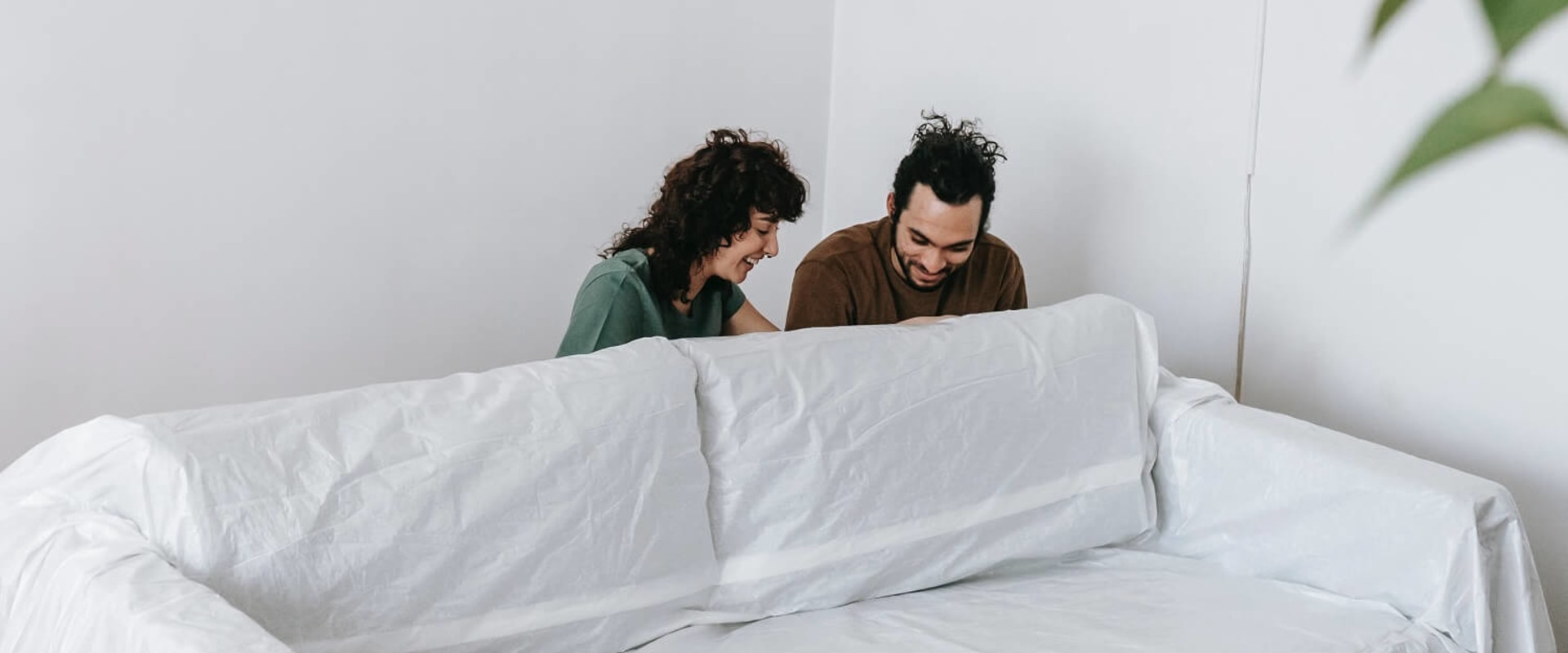
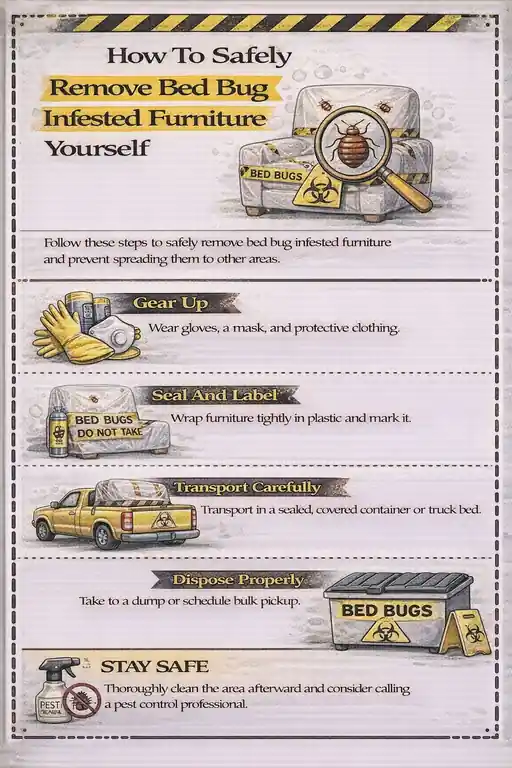
Before anything is lifted or dragged, fully seal the item in thick plastic or specialized mattress bags. Tape all openings tightly. This step alone can prevent bed bugs from spreading into hallways, stairwells, elevators, or vehicles—an issue we commonly encounter when items are moved uncovered.
Step 3: Prepare a Clear Exit Path
Clear a direct path out of the home and avoid resting the item on floors or walls along the way. Wear disposable gloves and clothing you can immediately bag and wash afterward. These precautions dramatically reduce the risk of bed bugs transferring to other rooms.
Step 4: Move and Dispose of the Furniture Properly
Move sealed furniture carefully and load it directly into a lined vehicle if possible. Many municipalities require infested items to be clearly labeled or damaged before disposal to prevent scavenging. Always follow local disposal regulations.
Step 5: Clean and Monitor After Removal
Once the furniture is gone, vacuum the removal path, dispose of the vacuum contents in a sealed bag, and continue monitoring the area. Removing infested furniture is one step in a larger bed bug control plan—not a standalone solution.
By following these experience-backed steps, you can remove bed bugs–infested furniture with far less risk of spreading the infestation, saving time, stress, and costly repeat treatments, while also supporting a healthier home environment and the advantages of air purifiers.
“In our experience at Jiffy Junk, bed bugs don’t spread because furniture leaves the house—they spread when it leaves uncontained. Nearly every reinfestation we see traces back to one missed step: moving an infested item without fully sealing it first. When removal is done correctly, it doesn’t just get rid of furniture—it stops the problem from traveling.”
Essential Resources
Below are seven expert-backed, highly reliable resources that align with Jiffy Junk’s real-world experience removing bed bug–infested furniture safely. These sources help you understand what to remove, how to contain it, and how to avoid spreading bed bugs further before taking action.
EPA Bed Bugs Overview — Official Guidance on Bed Bug Behavior & Risk
https://www.epa.gov/bedbugs
This EPA resource explains how bed bugs spread, where they hide, and why improper furniture removal often worsens infestations—essential knowledge before moving any item.
EPA Bed Bug Prevention & Detection — How to Identify and Contain Infested Furniture
https://www.epa.gov/bedbugs/bed-bug-prevention-detection-and-control
Offers practical advice on spotting bed bug activity and reducing spread during handling, sealing, and disposal—key steps we see overlooked most often.
EPA Local Bed Bug Assistance — Find Rules That Apply Where You Live
https://www.epa.gov/bedbugs/local-resources-bed-bug-assistance
Disposal requirements vary by city and state. This resource helps you find local health department guidance so you don’t accidentally violate regulations or create risk for others.
Purdue University Furniture Disposal Guide — Know When Furniture Must Go
https://extension.entm.purdue.edu/bedbugs/furnitureDisposal.php
A research-based university guide explaining which furniture items may be salvageable and which are safest to discard—useful for weighing DIY vs. professional removal.
CDC Bed Bug Resources — Understand Health and Exposure Considerations
https://www.cdc.gov/bed-bugs/hcp/communication-resources/index.html
Provides public health context around bed bugs, helping you understand why containment, protective measures, and post-removal cleaning matter.
DIY Furniture Disposal Guide — Practical Steps for Safe Removal
https://thehomefixes.com/how-to-dispose-of-bed-bug-furniture/
Breaks down hands-on steps for sealing, labeling, and disposing of infested furniture—complementing the containment practices used by professional removal teams.
EPA Bed Bug Laws & Regulations — Avoid Improper Disposal Mistakes
https://www.epa.gov/bedbugs/bed-bug-laws-and-regulations
Outlines legal and regulatory considerations around bed bug handling and disposal, helping ensure removal is both safe and compliant.
Together, these resources support informed, responsible decision-making and reflect the same containment-first approach Jiffy Junk uses to prevent bed bugs from spreading during furniture removal and bed bug treatment practices.
Supporting Statistics
Bed bugs multiply fast
CDC: One female bed bug lays ~5 eggs per day
Eggs hatch in ~4–12 days
What we see on removals: one unsealed item can turn into a room-wide problem fast
Source: https://www.cdc.gov/dpdx/bedbugs/index.html
Infested furniture can stay risky for months
CDC: Bed bugs can survive several months without feeding
What we see on jobs: “storing it for later” often leads to reinfestation
Source: https://www.cdc.gov/bed-bugs/about/index.html
Most people misidentify bed bugs
PestWorld/NPMA: Only 29% of Americans can identify bed bugs
82%+ of pest pros treated bed bugs
What we see: furniture gets moved before it’s sealed, which spreads bugs
Source: https://www.pestworld.org/news-hub/pest-articles/bed-bug-survey-results-facts/
These statistics show why junk removal must be containment-first—because bed bugs multiply quickly, survive for months, and are often misidentified, making unsealed furniture movement a major cause of spread.
Final Thought & Opinion
Bed bug furniture removal isn’t risky because it’s difficult—it’s risky because it’s often underestimated. In our experience, infestations don’t usually get worse on their own. They spread when infested furniture is moved without proper control.
What we’ve seen repeatedly on real removal jobs:
Problems start when furniture isn’t fully sealed
Bed bugs escape into hallways, vehicles, or other rooms
Small mistakes lead to reinfestation weeks later
The deciding factor is control:
Fully contain the furniture
Move it deliberately
Dispose of it properly and legally
When these steps are followed, removal stops the problem. When they aren’t, the infestation travels.
Our honest take:
DIY removal can be done safely—but only with a containment-first mindset. If there’s uncertainty about sealing, transport, or disposal rules, that’s usually the point where professional removal becomes the safer option, not just the easier one.
FAQ on Bed Bug Furniture Removal
Q: Can furniture be removed without spreading bed bugs?
A: Yes—if it’s sealed before moving. Most spread happens when items are carried out uncovered.
Q: Does all infested furniture need to be discarded?
A: No.
Hard-surface furniture may be treatable.
Mattresses and upholstered items are usually safer to discard once infested.
Q: What’s the most common removal mistake?
A: Moving furniture before sealing it. This is the top cause of reinfestation we see.
Q: Can infested furniture be left outside for pickup?
A: Sometimes.
Many cities require labeling or damaging items.
Always check local disposal rules first.
Q: Is furniture removal enough to eliminate bed bugs?
A: No.
Removal reduces spread.
Ongoing monitoring and treatment are usually required to fully resolve the infestation.