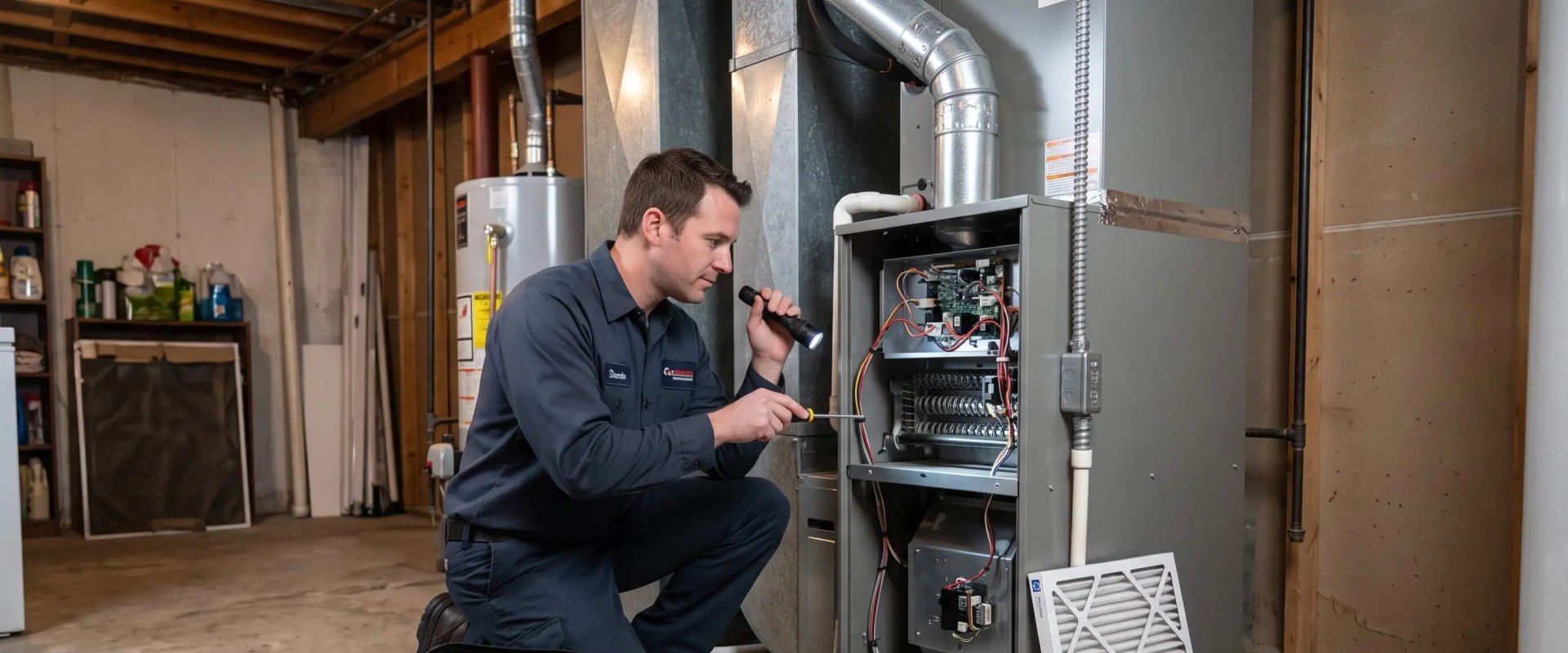
Behind the front panel of an electric furnace sit a handful of screw terminals carrying some of the heaviest electrical loads in your home, and every heating season loosens them a little more. You'll never see it happen from the hallway. So yes, most electric furnaces should get one professional check a year, ideally in the fall, even though nothing inside the cabinet ever burns.
Don't take a quiet furnace for granted. An electric unit has no flame to tune and no flue to clear, so the wear shows up in the wiring and in the small switches that control the heating elements. Understanding what is an electric furnace is and how it operates can help you recognize where problems might develop. A gas furnace at least gives you a flame to look at. An electric one stays quiet right up until the heat stops.
TL;DR Quick Answers
what is an electric furnace
An electric furnace is a forced-air heating system that warms your home with electric resistance coils instead of a flame. A blower pulls room air through a filter, pushes it across the hot coils, and sends it out through your ducts. Nothing burns inside, so the wear hides in the wiring and the filter.
How it heats: Three to seven heating elements switch on in stages so they don’t overload your electrical panel.
Built-in safety: A high-limit switch cuts the power when airflow drops or the cabinet gets too hot.
No carbon monoxide: With no flame or flue, it can’t produce CO on its own.
Hidden wear: Loose terminals and a clogged filter don’t show from the hallway. Check the filter monthly and book one professional check each fall.
Top Takeaways
An electric furnace heats air with resistance coils and a blower, with no flame or flue.
One professional check each fall makes sense for most homes.
Electric furnaces need less service than gas units, though their risks are electrical and hidden from view.
A good tune-up covers connections, amp draw, sequencer, limit switch, blower, and airflow.
The filter is your job. Check it monthly and replace it every one to three months.
What Is an Electric Furnace?
An electric furnace is a forced-air heating system that warms your home with electric resistance coils instead of a gas flame. A blower pulls room air through a filter, pushes it across the hot coils, and sends it out through your ducts. In a lot of homes, it shares a cabinet and blower with the central air conditioner.
For a closer look at the parts and the heating sequence, this breakdown of how an electric furnace works walks through each step. Electric units belong to the wider family of central heating furnaces, alongside gas, propane, oil, and even wood-fired models.
Inside the cabinet, three to seven heating elements switch on in stages so they don't overload your electrical panel. A high-limit switch keeps watch on the temperature. When air stops moving across the coils, it cuts the power.
Does an Electric Furnace Need Professional Maintenance Every Year?
For most homes, yes. Plan on one check per heating season. The federal ENERGY STAR program suggests booking heating check-ups in the fall, before contractors' calendars fill up. While exploring different types of air purifiers can help improve indoor air quality, regular furnace maintenance remains essential for keeping your heating system running efficiently.
Why Electric Furnaces Need Less Service Than Gas Furnaces
There's no burner or exhaust vent in an electric furnace and no heat exchanger to crack, so a big chunk of a gas furnace checklist simply doesn't apply. It doesn't make carbon monoxide on its own, either. Checkbook, the consumer group, says gas and electric furnaces generally need less professional maintenance than other HVAC equipment, and it pushes back on blanket twice-a-year plans. I think they're right. When a company sells two visits a year for an electric furnace alone, ask what the second one actually checks.
Why a Yearly Check Still Makes Sense
Connections loosen. Every heating cycle warms and cools the high-amperage terminals feeding the elements until they work loose. A loose terminal runs hot and slowly cooks the wire insulation around it.
Safety parts quit without warning. A sequencer or limit switch can fail long before your house feels any different.
Your warranty may require it. Many manufacturers ask for proof of regular professional service, so flip to the service section of your owner's manual.
Airflow drops a little at a time. Dust on the blower wheel and an overdue filter choke airflow, so the limit switch trips more often.
What a Professional Electric Furnace Tune-Up Checks
A good technician should work through this list on an electric furnace. Half of a gas furnace checklist won't apply.
Shut off power and tighten every connection at the elements, sequencer, and terminal block.
Measure amp draw on each heating element to catch one that has burned out.
Test the sequencer or relays and confirm the elements stage on and off in order.
Test the high-limit switch and any thermal fuses.
Clean the blower motor and wheel, and lubricate the motor if its design allows.
Run the thermostat through a full heating cycle.
Look for discolored wiring, melted insulation, or warm breakers in the panel.
Check airflow and filter fit.
Clear the condensate drain if your system includes an air conditioning coil.
What You Can Handle Between Visits
You walk past this system every day, and that makes you the person most likely to catch a problem early. A few small habits do most of the protecting.
Check the filter monthly. Swap it out when it looks gray, or every one to three months. A clogged filter trips the limit switch more often than anything else, and this guide shows what a dirty furnace filter looks like.
Keep the area clear. Leave about three feet open in front of the cabinet, and keep storage boxes off the top.
Keep vents open. Closing too many supply or return vents starves the elements of airflow.
Note breaker trips. One trip after a storm may mean nothing. Repeat trips call for a professional.
Never open the furnace panel with the power on. Electric furnaces run on 240 volts, and the terminals carry enough current to seriously hurt you.
Signs Your Electric Furnace Needs Service Now
Call for service before the yearly visit if you notice any of these:
A burning or hot-plastic smell that lingers past the first few minutes of the season. A short whiff of burning dust at first start-up is normal.
A breaker that trips more than once
Lukewarm air from the vents
A blower that runs with no heat coming out
A furnace that cycles on and off every few minutes
An electric bill that jumps without colder weather to explain it
When Stretching the Schedule Can Be Reasonable
Most pages on this topic come from companies that sell the visit, so here's the other side. Some households can reasonably ask a technician whether every other year makes sense.
Signs you could stretch it: a newer unit with no warranty service requirement, light use in a mild climate, a heat pump doing most of the heating, and a clean history with no trips or repairs.
Signs you should stay yearly: an older furnace, heavy winter use, pets or high dust, warranty terms that require it, or any past electrical problem.
Can't decide? Keep the yearly check. It costs less than replacing a burned-out element or repairing a heat-damaged panel. Checking your pleated furnace filter regularly also helps maintain proper airflow and reduces unnecessary strain on the system.
Electric vs. Gas Furnace Maintenance
Main risks: An electric furnace brings electrical and overheating risks. Gas adds combustion, venting, and carbon monoxide risks.
What a technician checks: Electric visits focus on connections, elements, sequencers, and limit switches. Gas visits add burners, gas pressure, flame sensors, and the heat exchanger.
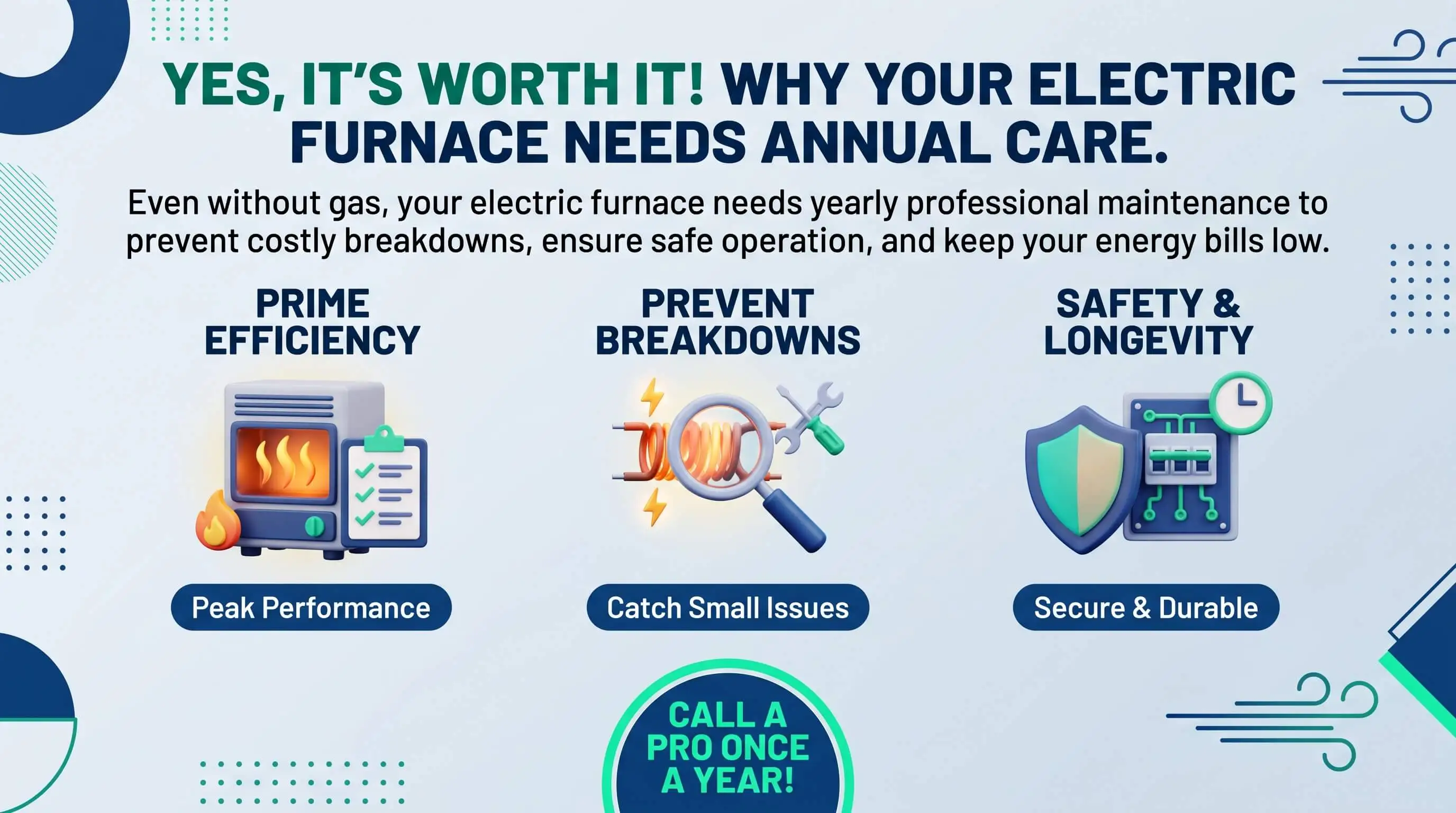
"In my 12 years servicing electric furnaces, the problem I run into most is a loose connection at an element terminal that's been overheating all season. The wire insulation usually discolors long before the heat quits, and that's exactly what a fall check should catch."
7 Essential Resources
How an electric furnace works: parts and heating sequence.
U.S. Department of Energy: Electric Resistance Heating: how elements stage and what trips the limit controller.
U.S. Fire Administration: Heating Fire Safety: yearly inspection and clearance advice.
EPA: Guide to Air Cleaners in the Home: choosing and replacing furnace filters.
Electrical Safety Foundation International: Homeowner Resources: checklists for your home's electrical system.
ACCA: Residential Quality Maintenance Standard: the standard behind contractor checklists.
InterNACHI: Inspecting HVAC Energy Efficiency: inspector training on electric central furnaces.
3 Supporting Statistics
Electric heat is common. The U.S. Energy Information Administration found that the share of U.S. homes using electricity for their main heating equipment rose from 30% in 2005 to 36% in 2015.
Heating equipment still starts fires. U.S. fire departments responded to an estimated average of 37,365 home heating equipment fires a year from 2020 through 2024, about 11% of reported home fires, according to the National Fire Protection Association.
Poor airflow wastes energy. ENERGY STAR reports that airflow problems can cut a heating and cooling system's efficiency by up to 15%.
With electric heating becoming more common, regular furnace maintenance and high quality filters help maintain proper airflow, improve energy efficiency, and reduce the risk of heating equipment problems.
Final Thoughts and Opinion
In my opinion, an electric furnace is one of the easiest heating systems to live with, and that ease is exactly why so many people forget about it. The parts most likely to fail sit out of sight, and they wear down through heat and loose connections instead of breaking all at once.
I'd book the fall check every year and treat it as cheap insurance against that slow wear. Do your part between visits with a monthly filter check, and lean on this furnace filter replacement guide to pick the right one. Those two habits keep your family warm and your system running for years.
Frequently Asked Questions
What Is an Electric Furnace?
An electric furnace is a central heating system that warms air with electric resistance elements instead of burning fuel. A blower moves air through a filter, across the heated elements, and out through your ducts. With no flame or flue, it can't create carbon monoxide on its own.
How Often Should an Electric Furnace Be Serviced?
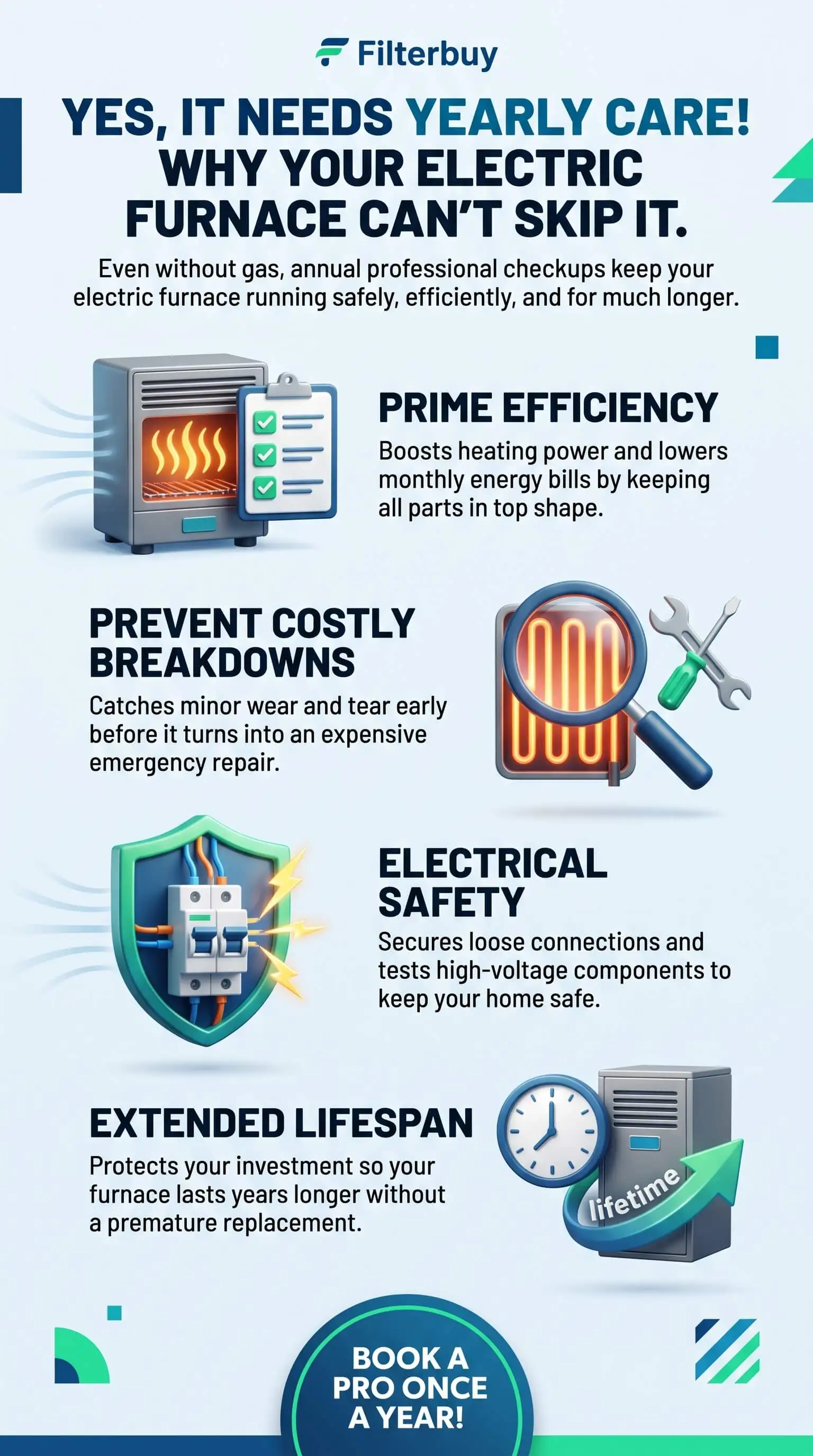
Most homes do well with one professional check a year, ideally in the fall before the heating season starts. Older units, heavy winter use, or a history of electrical trouble all justify staying yearly. A technician may let some newer, lightly used systems go longer.
Can I Maintain an Electric Furnace Myself?
You can handle the filter, keep vents open, and keep the area around the cabinet clear. Electrical work is another story. Testing elements, tightening terminals, and checking the sequencer or limit switch all mean working on 240-volt circuits, so hand those jobs to a licensed technician.
How Much Does Electric Furnace Maintenance Cost?
Prices vary by region and contractor, so ask for a written quote that lists exactly what the visit covers. Hold that list up against the electric-specific checks in this guide. Gas-only tasks like burner cleaning don't belong on it.
Does an Electric Furnace Produce Carbon Monoxide?
No. An electric furnace burns no fuel, so it can't create carbon monoxide by itself. Keep working CO alarms anyway if your home has any fuel-burning appliance, such as a gas water heater, a gas range, a fireplace, or an attached garage.
Give Your Electric Furnace One Good Check This Fall
Your electric furnace asks for less attention than a gas unit, and one professional check each fall keeps the wiring and switches you never see doing their job. Put that visit on your fall calendar, then keep up your monthly filter checks, especially if you use MERV 13 pleated furnace air filters, so your home stays warm all winter.


