Your nose is the only air quality instrument in the house that came free, and it just flagged something.
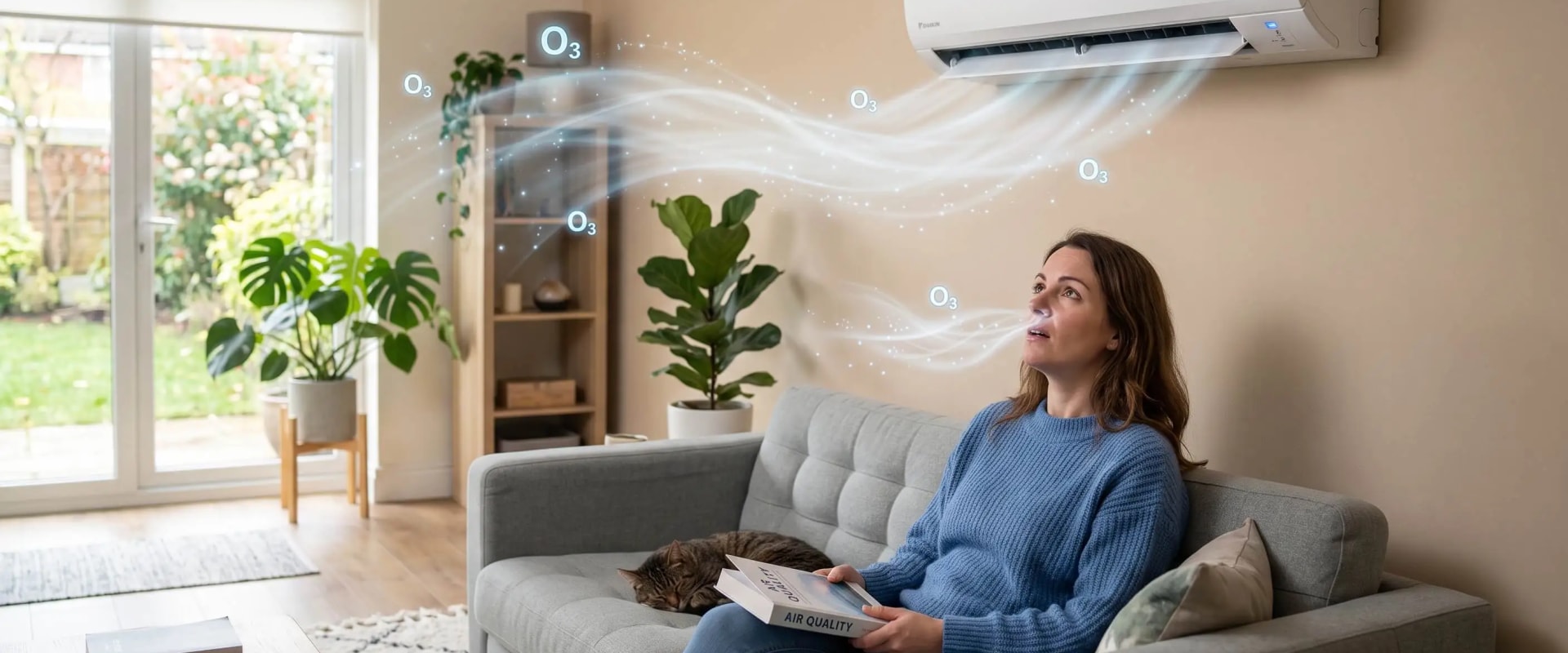
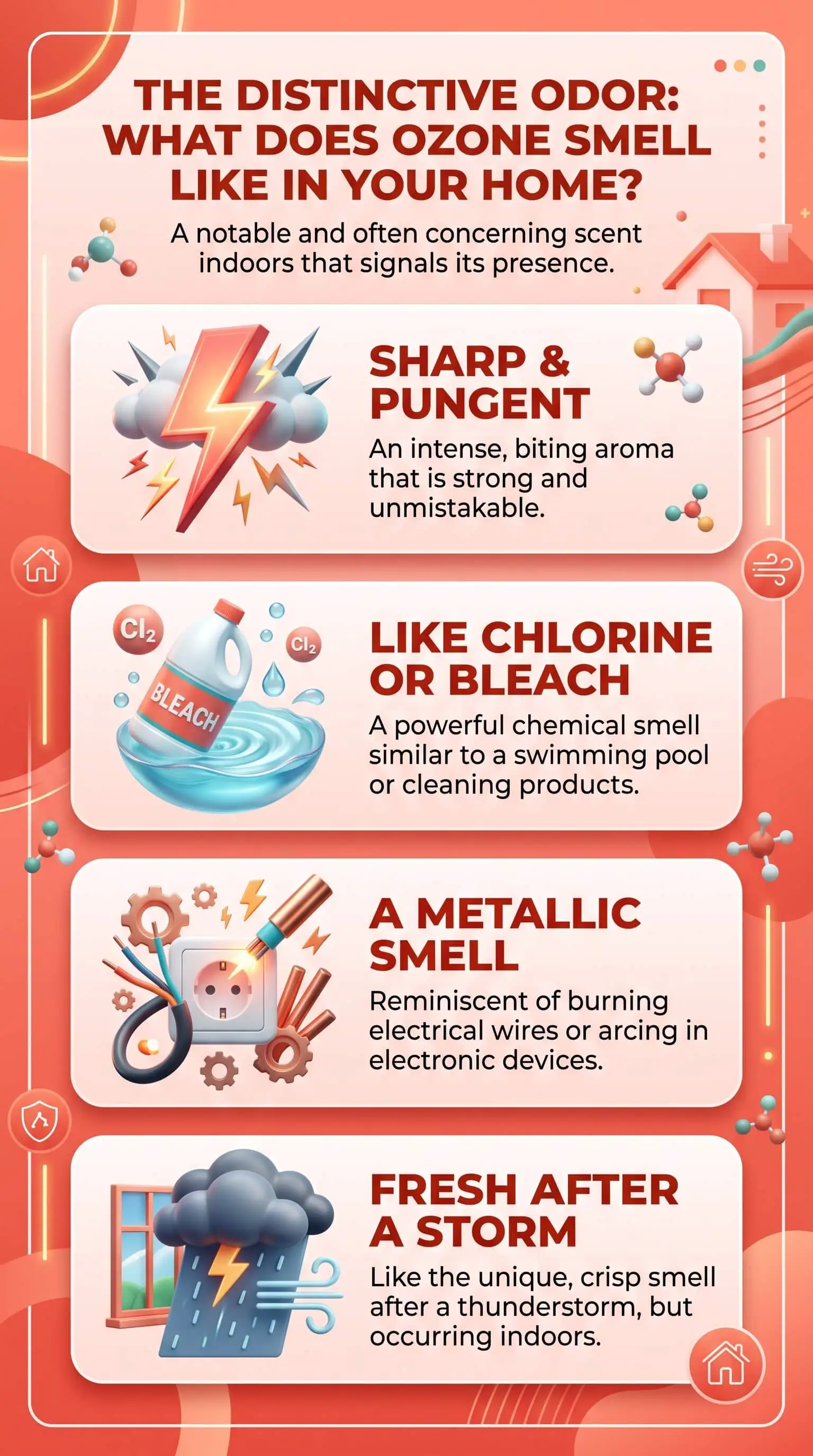
Sharp and metallic, a bit like bleach. That’s ozone, and it’s the same electric tang you catch a few seconds before a thunderstorm breaks. Ozone is O3, an unstable three-atom cousin of the oxygen you breathe, and it turns up whenever electricity or ultraviolet light knocks ordinary oxygen apart. Outdoors after a storm that scent is harmless, but indoors it’s usually your house pointing at something, and once in a while at something that can’t wait until the weekend. If you've ever wondered what does ozone smell like, that fresh, storm-like scent indoors can also be a clue that your HVAC system or another electrical source deserves a closer look.
TL;DR Quick Answers
What Does Ozone Smell Like?
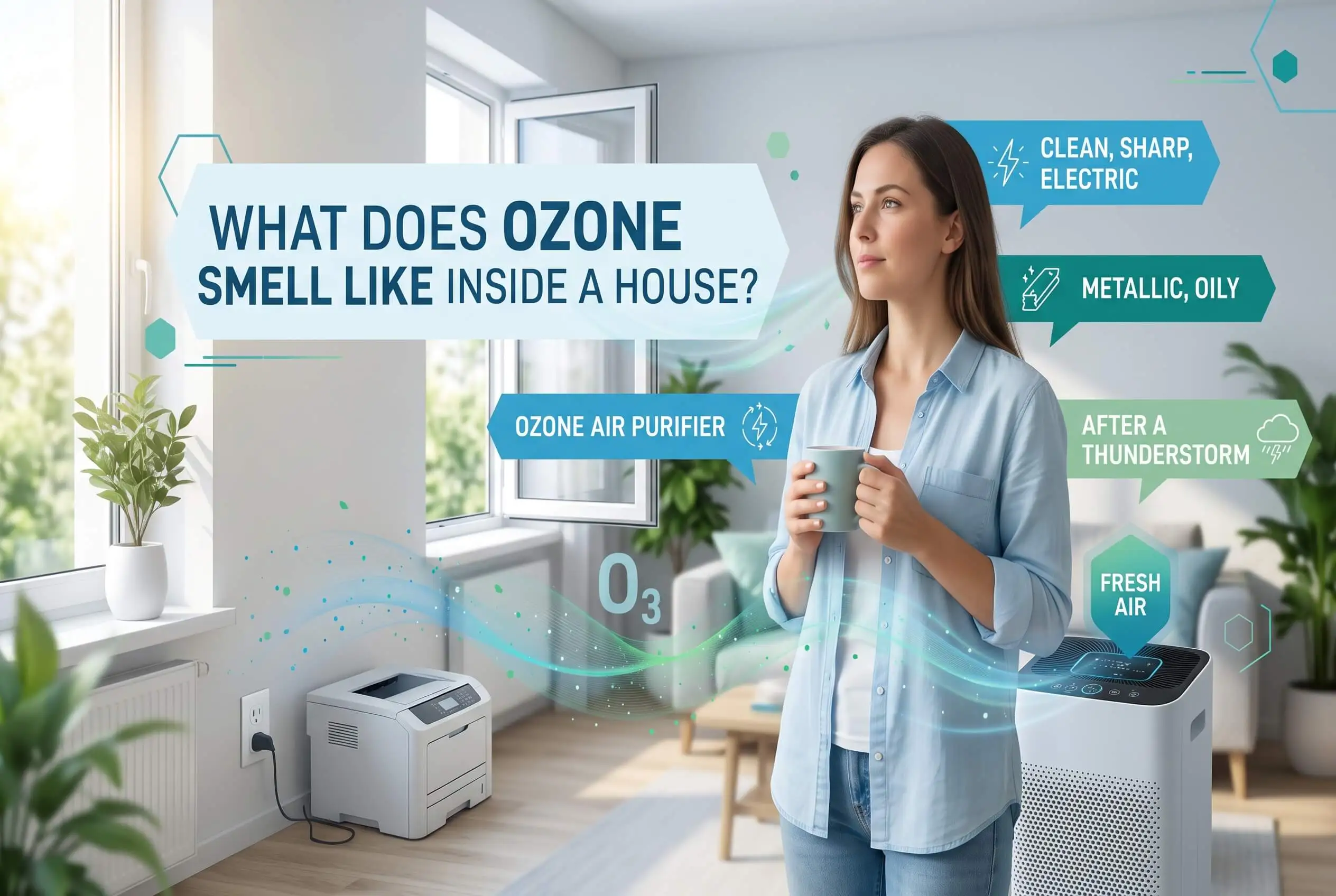
Ozone smells sharp and metallic, closest to chlorine or bleach, with the same electric tang you catch right before a thunderstorm breaks. Indoors that scent almost always has a source you can switch off, and in my experience it's usually an ionizer or ozone generator rather than anything mysterious.
Closest comparison: chlorine or bleach, the way an indoor pool smells from the doorway
Secondary comparison: metallic or electric, like a hot wire or a struck match
Most common indoor source: an ionizer, ozone generator, or UV-C lamp already running in the house
Not ozone: the earthy smell after rain, which is petrichor from soil bacteria
Act on it immediately if: the smell sits right at an outlet, switch, or appliance, since that points at arcing wiring
Top Takeaways
The smell itself: sharp and metallic, closest to chlorine or bleach, carrying an electric edge
First suspect indoors: an ionizer, ozone generator, or UV-C lamp already running somewhere in the house
The urgent version: ozone or burning at an outlet, switch, or appliance points at arcing, so cut the breaker and call a licensed electrician
A different emergency: rotten eggs or sulfur points at a gas leak, so leave the house and call from outside
What actually works: remove the source and ventilate, because filters are built for particles rather than gases
What Ozone Smells Like, and What It Doesn’t
Ask ten people to describe it and most will say chlorine or bleach, the way an indoor pool announces itself from the doorway. A few land on metallic, like a hot wire or a struck match. The rest reach for clean and crisp, which is the pre-storm version nearly everyone already knows without having a name for it.
One correction I find myself making constantly: the earthy smell after rain isn’t ozone. That’s petrichor, and it comes mostly from geosmin, a compound soil bacteria release when raindrops land on dry ground. Lightning makes the ozone, and you smell that before and during the storm. Same weather, two different smells, and mixing them up sends people hunting in the wrong part of the house.
The costlier mistake is confusing ozone with a smell that needs a completely different response. Burning plastic or scorched wire reads harsher and melty, and it tends to arrive while one particular outlet or appliance is running. Musty and damp, like an old basement, usually means mold in the ductwork. That sour gym-sock note in the first few minutes after the air conditioning starts is bacteria sitting on a damp evaporator coil, and it turns up on schedule every time the system cycles. Rotten eggs or sulfur belongs in a category of its own as a possible gas leak, and I’ll come back to that one. For a longer side-by-side on how to tell an ozone smell apart from similar odors, that comparison is worth reading before you start pulling panels off anything.
Start With the Purifier Before You Start With the Wiring
The thing that catches people off guard is that the machine they bought to clean their air is the machine making the smell.
Ozone generators produce it deliberately. Ionizers, electrostatic precipitators, and certain UV-C lamps mounted inside HVAC systems throw off smaller amounts as a byproduct. Own any of those, smell chlorine indoors, and you’ve got a strong first suspect long before you go near the breaker panel. I’ve written before about the risks that come with ozone-generating purifiers, and this smell is how most homeowners find out they own one.
The test costs nothing and takes an hour. Switch the device off at the wall, shut the door to that room, and walk away. Come back and take one breath from the doorway before the room has a chance to reset your nose. If the smell left with the device, you found your source. If it’s holding at the same strength, move on to the electrical check.
Pro tip: leave the device off while people and pets are in the room, and crack a window. Birds are unusually sensitive to ozone, and anyone in the house managing asthma will typically notice it well before the rest of the family does.
The One Ozone Smell That Can’t Wait
Electricity splits oxygen apart, which is exactly why arcing wiring makes ozone. A sharp chlorine or electrical smell sitting right at an outlet, a light switch, or an appliance is a recognized warning sign, and it turns more serious if you also catch a faint buzz, feel warmth in the faceplate, or watch the lights flicker on that circuit.
Stop using that outlet and switch the circuit off at the breaker, then get a licensed electrician in before you turn it back on. The Electrical Safety Foundation International puts arcing faults behind more than 30,000 home fires a year in the United States, and this smell is often the only advance warning a homeowner gets.
Rotten eggs or sulfur is a different emergency with a different response. Leave the house on foot, keep your hands off light switches and phones on the way out, and call your gas utility or 911 from well away from the building. Don’t spend a minute hunting for the source.
Clearing It, and Why a Filter Isn’t the Fix
Ozone is unstable, so it breaks back down into ordinary oxygen the moment the source stops. In my experience that runs roughly thirty minutes to two hours in a normal room, and moving air speeds it up noticeably. Open the windows and run a fan.
This is where people spend money they didn’t need to spend. A particle filter captures particles, and ozone is a gas, so a standard pleated filter or a HEPA filter won’t touch it no matter how high the rating climbs. Filters carrying an activated carbon layer do absorb some ozone, and that capacity fades as the carbon loads up. Carbon helps at the margins without replacing the act of switching the source off.
Find the source, stop it, ventilate, and only then start thinking about what else is circulating. Once the ozone question is settled, a good filter earns its keep against the dust, pollen, dander, and smoke that never announce themselves at all.
“After all the years I’ve spent walking through houses with a meter in my hand, I’ve traced more indoor ozone back to purifiers than to anything else. The machine people bought to fix their air was the reason it smelled wrong.”
7 Essential Resources
Find Out Whether Your Air Purifier Is the Source
The EPA worked through the peer-reviewed literature on ozone generators sold as air cleaners and spells out why even low amounts bring on chest pain, coughing, and throat irritation. Ozone Generators That Are Sold as Air Cleaners
See the Exposure Numbers Professionals Work From
NIOSH fits ozone’s physical description, exposure limits, symptoms, and first aid onto one reference card, which makes it the fastest way to check anything you read elsewhere. NIOSH Pocket Guide to Chemical Hazards: Ozone
Understand the Wiring Fault Behind an Electrical Smell
This lays out what an arc fault is, how damaged or overloaded wiring creates one, and how arc-fault circuit interrupters cut the power before a fire starts. Arc Fault Circuit Interrupters
Know Exactly What to Do If You Smell Rotten Eggs Instead
The federal pipeline safety office lists the steps for a suspected natural gas leak, including which household actions to avoid on your way out the door. Recognizing and Responding to Pipeline Emergencies
Check Whether the Ozone Is Drifting In From Outdoors
AirNow pairs every ozone level with a specific recommendation, so you can decide whether opening the windows this afternoon is a good idea. Air Quality Guide for Ozone
Learn Who in Your Household Is Most Vulnerable
The American Lung Association explains how ozone attacks lung tissue and names the groups carrying the highest risk, including children, older adults, and anyone managing asthma or COPD. Ozone and Your Lungs
See What Indoor Air Research Says About Ozone Exposure
NIEHS gathers research on indoor air pollutants, including a finding that short-term indoor and outdoor ozone exposure is tracked with increased blood platelets and higher blood pressure in healthy adults. Indoor Air Quality
3 Statistics
0.050 parts per million is the ozone ceiling for a certified air cleaner. California requires every indoor air cleaner sold in the state to certify at an ozone emission concentration no greater than 0.050 ppm, which tells you how small a quantity regulators will accept in a room people occupy. California Air Resources Board
0.1 parts per million is the federal workplace limit across an eight-hour shift. OSHA lists ozone in Table Z-1 at a permissible exposure limit of 0.1 ppm as an eight-hour time-weighted average, and that ceiling was written for industrial floors rather than living rooms. OSHA Annotated Table Z-1
Fire departments logged an estimated 24,200 residential building electrical fires in 2021. The U.S. Fire Administration ties an estimated 295 deaths, 900 injuries, and more than $1.2 billion in property loss to those fires, which is why an ozone smell at an outlet earns a same-day phone call. U.S. Fire Administration
Ozone safety standards are extremely strict, making proper maintenance and professional ionizer installation important for improving indoor air quality without introducing unsafe ozone levels into your home.
Final Thoughts and Opinion
Years of chasing this smell through other people’s houses has left me with one firm position. An ozone smell is information, and information beats a purchase. Nearly every indoor case I’ve traced came back to something already plugged in and running, so the fix turned out to be a switch rather than a product.
I want to be fair about the mild end of this too. Outdoor ozone drifting through open windows on a hot afternoon isn’t a crisis, and closing up during the worst of the heat and reopening in the evening handles it completely. Keeping a clean MERV 8 pleated HVAC air filter in your HVAC system also helps maintain good airflow and cleaner indoor air, although it isn't designed to remove ozone. The two cases that deserve your full attention sit at the other end, because arcing wiring and a suspected gas leak both ask you to stop reading and act, and neither one improves while you wait to see whether the smell fades on its own.
Frequently Asked Questions
Does Ozone Smell Like Chlorine?
Yes, and chlorine or bleach is the comparison most people reach for first. Both are strong oxidizers, so the stinging quality they share is no coincidence. When a hallway smells like a swimming pool and there’s no pool anywhere nearby, ozone is your likely answer.
Why Does My Air Purifier Smell Like Ozone?
Because some purifiers make ozone, either on purpose or as a byproduct. Ozone generators emit it by design, while ionizers, electrostatic precipitators, and certain UV-C lamps emit smaller amounts. Switch the device off for an hour with the room closed and see whether the smell leaves with it.
Is the Smell After Rain Ozone?
Not the earthy part. That one’s petrichor, driven mostly by geosmin from soil bacteria released when rain hits dry ground. The sharp electric smell you notice before and during the storm is the ozone, made by lightning splitting oxygen in the air above you.
Can an Air Filter Remove Ozone?
Not a standard one. Pleated and HEPA filters trap particles, and ozone is a gas, so the rating on the filter changes nothing here. Activated carbon absorbs some ozone until the carbon loads up, which leaves source removal and ventilation as the reliable answer.
Why Does My Car Smell Like Ozone?
Usually an electrical issue in a blower motor, a fan, or the wiring behind the dash, an aftermarket ionizer somebody installed, or outdoor ozone pulled through the vents on a hot afternoon. A persistent electrical-ozone smell in a car is worth having a mechanic look at.
Put That Smell to Work
Your nose already narrowed the search down to one gas with a short list of causes, so the next move is a walk through the house with the device switches and the breaker panel in mind. If your AC smells bad, include it in your inspection since mold, dirty coils, or electrical issues can sometimes contribute to unusual odors. Start with whatever plugs in, and bring in a licensed electrician the moment the smell tracks back to wiring.